San Diego County features distinct microclimates that foster two separate structural threats simultaneously. Western subterranean termites (Reticulitermes hesperus) dwell in the damp subsoil beneath concrete…
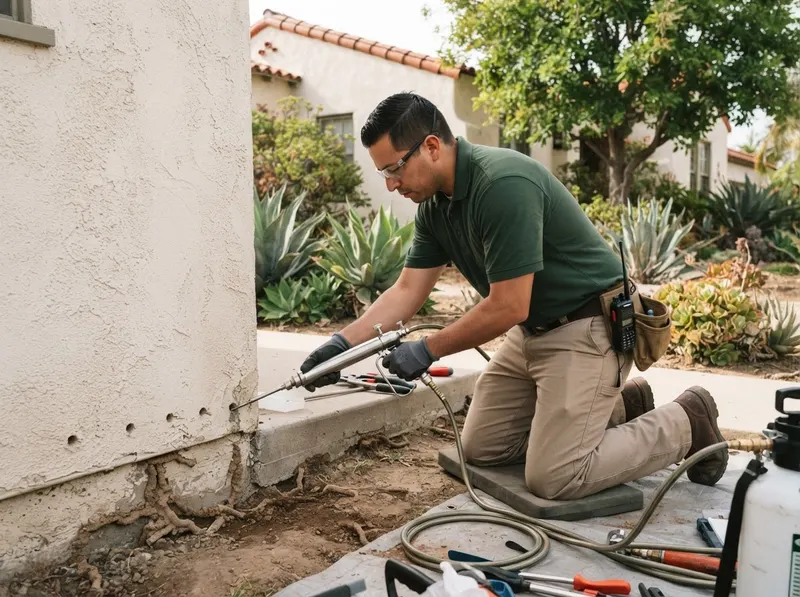
San Diego County features distinct microclimates that foster two separate structural threats simultaneously. Western subterranean termites (Reticulitermes hesperus) dwell in the damp subsoil beneath concrete foundations, requiring continuous ground moisture often provided by coastal marine layers in Pacific Beach, Ocean Beach, and Point Loma. Conversely, Western drywood termites (Incisitermes minor) require no soil contact whatsoever, entering through attic vents, fascia boards, and exposed patio framing during late summer swarming seasons across inland canyon rims in Scripps Ranch, Carmel Valley, and Rancho Bernardo.
Selecting the proper treatment protocol depends on the entry vector and biological habits of the specific colony. If subterranean mud shelter tubes appear along the stem wall of a raised foundation, localized soil-barrier mitigation delivers targeted defense without structural displacement. If drywood fecal pellets accumulate under exposed rafters in a Craftsman home in North Park or Hillcrest, direct localized drill-and-pressure injections eliminate colonies directly within infested timber pockets. The primary trade-off involves disruption versus broad coverage: localized precision injection avoids the chemical fumigation that forces family displacement and landscape destruction, but it requires precise visual and acoustic verification to ensure all satellite colonies within remote joists are reached.
Canyon-rim properties situated near Torrey Pines State Natural Reserve, Mission Bay Park, or native chaparral corridors face heightened colonization pressure. Coastal breezes carry drywood alates straight into unprotected exterior wood, while canyon runoff maintains the sub-slab dampness subterranean workers exploit. Durable mitigation pairs targeted low-toxicity botanical or mineral formulations with mechanical exclusion, including installing fine-mesh 1/16-inch copper screening over attic crawl vents and replacing moisture-damaged wood before structural failure occurs.
Every job gets a firm, written price after a free on-site visit.
Tell us about your drywood and subterranean termite mitigation job in San Diego and we'll send a clear, written quote, usually the same day.
 Canyon Finch Pest Control